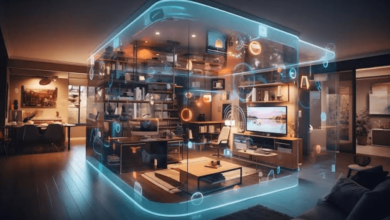
The future of Human-Computer Interaction (HCI) is poised for significant evolution. Emerging technologies like artificial intelligence, virtual reality, and natural language processing will shape user experienes. These advancements promise enhanced personalization and immersion. Moreover, a focus on accessibility and inclusivity will ensure diverse needs are met. As these elements converge, they will challenge traditional paradigms. What new frameworks will emerge to facilitate this complex interplay between users and technology?
The Rise of Artificial Intelligence in HCI
As technology evolves, the integration of artificial intelligence (AI) into human-computer interaction (HCI) has become increasingly significant, enhancing user experiences and streamlining complex tasks.
Machine learning and predictive analytics facilitate user personalization, while cognitive computing enables adaptive interfaces that adjust to user needs.
Furthermore, incorporating emotional intelligence fosters deeper connections, creating interactions that resonate with users’ desires for freedom and autonomy in their digital environments.
See also: 3287543814 – Everything You Need to Know
Immersive Experiences Through Virtual Reality
How do immersive experiences reshape user engagement in digital landscapes?
Virtual reality creates dynamic virtual environments that captivate users, fostering deep interaction. By integrating sensory feedback, these experiences enhance perception and emotional connection, allowing individuals to explore and learn in unprecedented ways.
This interdisciplinary approach not only transforms entertainment but also redefines education and training, empowering users to navigate complex scenarios freely and intuitively.
The Role of Natural Language Processing
Immersive experiences facilitated by virtual reality significantly enhance user engagement, yet the integration of natural language processing (NLP) further amplifies this interaction.
By employing voice recognition, users can engage seamlessly with digital environments, enhancing intuitive communication.
Furthermore, sentiment analysis allows systems to interpret emotional context, tailoring responses and fostering a more personalized experience.
This interdisciplinary approach promotes a liberated user experience in human-computer interaction.
Accessibility and Inclusivity in Future Interactions
What strategies can be employed to ensure that future interactions are both accessible and inclusive for all users?
Emphasizing universal design, developers can integrate adaptive technologies and inclusive interfaces to meet diverse user needs.
Assistive devices enhance cognitive accessibility, while barrier-free navigation fosters user empowerment.
Conclusion
As the landscape of Human-Computer Interaction evolves, it becomes clear that “the pen is mightier than the sword.” This adage resonates with the transformative potential of AI, virtual reality, and natural language processing in shaping user experiences. By prioritizing accessibility and inclusivity, future interactions will empower diverse users, fostering deeper emotional connections and autonomy. An interdisciplinary approach will be essential in crafting these immersive environments, ultimately redefining the relationship between humans and technology for a more engaged society.